



Per Game
Total
Per 36
NBA Per Game Stats
Loading Per Game Stats...
2025
2024
2023
2022
2021
2020
2019
2018
2017
2016

Schedule
By Month
Starting/Off Bench
Days Rest
Vs Opp
By Result
2024 NBA Per Game Split Stats
Loading Split Stats...
Advanced Stats
Loading Advanced Stats...
2025
2024
2023
2022
2021
2020
2019
2018
2017
2016
Stat Review
How does Caris LeVert compare to other players?
This section compares his stats with all players from the previous three seasons (minimum 200 minutes played)*. The bar represents the player's percentile rank. For example, if the bar is halfway across, then the player falls into the 50th percentile for that stat and it would be considered average.
True Shooting %
52.1%
Effective Field Goal %
49.6%
3-Point Attempt Rate
47.7%
Free Throw Rate
22.1%
Offensive Rebound %
1.8%
Defensive Rebound %
8.2%
Total Rebound %
5.0%
Assist %
18.1%
Steal %
2.0%
Block %
3.3%
Turnover %
12.4%
Usage %
17.8%
Fantasy Points Per Game
16.5
Fantasy Points Per Minute
0.9
Historical ADP
Loading Historical ADP...
Pistons Depth Chart
Our full team depth charts are reserved for RotoWire subscribers.
Subscribe Now
Pistons Rotation: Minutes Breakdown
Loading Pistons Rotation Data...
Average Fantasy Points
Average Fantasy Points are determined when Caris LeVert was active vs. non-active during the season. Click here to view average fantasy points for a different time period.
Minutes
FanDuel
DraftKings
Yahoo
FantasyDraft
Head2Head
Sorare
Loading Average Minutes...
Recent RotoWire Articles Featuring Caris LeVert See More
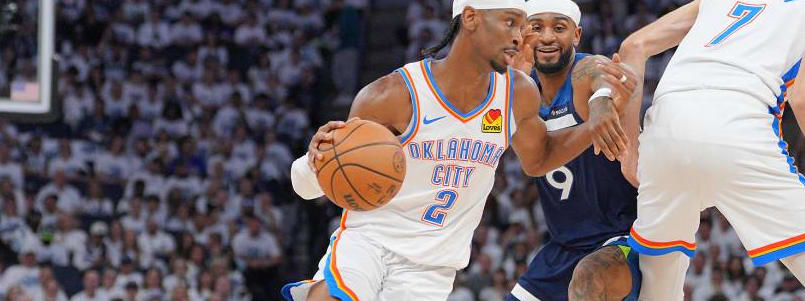
Saturday's top NBA DFS options on FanDuel include Shai Gilgeous-Alexander, as the Oklahoma City Thunder take on the Golden State Warriors.

Maximize your DraftKings NBA DFS lineups with expert breakdowns, including top matchups, injury alerts, elite targets and value plays to dominate Sunday's slate.
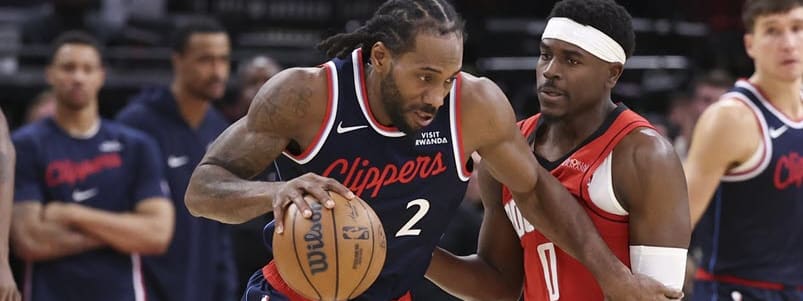
RotoWire's experts provide their best NBA bets for Friday's games, including predictions on the Detroit Pistons vs. Golden State Warriors, Neemias Queta and Kawhi Leonard.

RotoWire's Joe Mayo analyzes Thursday's NBA games and provides expert advice for building a winning DraftKings DFS lineup.

Look no further for expert DraftKings NBA DFS strategy for Wednesday, as RotoWire's Joe Mayo highlights matchups, the injury report and recent performances to find value.
Past Fantasy Outlooks
2023
2022
2021
2020
2019
2018
2017
2016
LeVert has always been talented, but the 2022-23 season did not go well. He actually posted some of his worst numbers since his sophomore season, averaging 12.1 points, 3.8 rebounds, 3.9 assists and 1.0 steals across 30.2 minutes a night. We're talking about a player who averaged 18.6 points, 4.2 rebounds, 4.6 assists and 1.2 steals across the three previous years. He did that damage for much worse teams, but it'll be tough for LeVert to return to that form in Cleveland. The primary problem is that Darius Garland and Donovan Mitchell dominate touches and playmaking duties. It's tough for LeVert to do what he does best when those two are asked to do so much, and it's even more problematic that LeVert is expected to return to a bench role after the signing of Max Strus. LeVert came off the bench 44 times last year and averaged just 10.2 points, 3.4 rebounds, 3.1 assists and 1.0 steals across 27.2 minutes a night when doing so. Those are sadly the numbers we anticipate from LeVert this year, and a change of scenery could be on the way if his role continues to fall off. Someone might take LeVert at the end of your draft, but it would be wise to pass on him and take someone younger with a higher upside.
More Fantasy News

Won't play Sunday
LeVert has been ruled out for Sunday's game against the Heat due to a left wrist sprain.
ANALYSIS
Subscribe now to instantly reveal our take on this news.
Subscribe now to instantly reveal our take on this news.
Quiet results again
LeVert accumulated five points (2-4 FG, 1-3 3Pt), one rebound, one assist, one block and one steal in 21 minutes during Monday's 114-103 loss to the Spurs.
ANALYSIS
Subscribe now to instantly reveal our take on this news.
Subscribe now to instantly reveal our take on this news.
Logs 20 minutes in return
LeVert (illness) provided four points (2-6 FG, 0-3 3Pt), three assists, two rebounds, one block and one steal across 20 minutes during Tuesday's 124-121 win over Denver.
ANALYSIS
Subscribe now to instantly reveal our take on this news.
Subscribe now to instantly reveal our take on this news.
Available to play
LeVert (illness) is available to play for Tuesday against Denver.
ANALYSIS
Subscribe now to instantly reveal our take on this news.
Subscribe now to instantly reveal our take on this news.
Iffy for Tuesday
LeVert (illness) is questionable for Tuesday's game against the Nuggets.
ANALYSIS
Subscribe now to instantly reveal our take on this news.
Subscribe now to instantly reveal our take on this news.
Latest Fantasy Rumors
Excited to play under Bickerstaff
LeVert said Sunday that he's excited to play under coach J.B. Bickerstaff again, Hunter Pattinson of The Athletic reports.
ANALYSIS
"J.B. brought out a different part of my game, and I've always said that. Once I went to Cleveland, I was asked to play defense," LeVert said. "Before then, I wasn't really asked to play defense, and I think that's one of the stronger parts of my game now. Those things really helped me take my game to the next level." The familiarity between LeVert and Bickerstaff could help him hit the ground running in Detroit. With the Pistons losing Tim Hardaway and Malik Beasley, LeVert has a wide path to minutes on his new team, along with another free agent addition in Duncan Robinson.
"J.B. brought out a different part of my game, and I've always said that. Once I went to Cleveland, I was asked to play defense," LeVert said. "Before then, I wasn't really asked to play defense, and I think that's one of the stronger parts of my game now. Those things really helped me take my game to the next level." The familiarity between LeVert and Bickerstaff could help him hit the ground running in Detroit. With the Pistons losing Tim Hardaway and Malik Beasley, LeVert has a wide path to minutes on his new team, along with another free agent addition in Duncan Robinson.