






While all hitters in fantasy baseball are grouped together, there are two distinct groups of pitchers: starters and relievers. Finding a balance between the two as you build your fantasy baseball roster is critical for success. Overload your roster with too many starters and you run the risk of a crippling ERA or suffering a lack of saves. Draft too many relievers and you'll have volatile averages and struggle to compete in wins and strikeouts.
It all comes down to balancing MLB player stats with whatever scoring settings your league uses. Roster settings will also factor in, as some leagues allow managers to choose how many starters and relievers to have on their active roster, while others having distinct slots for each.
Understanding Starters vs Relievers' Roles in Fantasy Baseball
Starters in fantasy baseball throw the bulk of innings. They typically throw between four and seven innings (the average was 5.19 in 2025), compiling strikeouts while competing in ERA and WHIP. They receive the bulk of wins because of this, and they typically appear in games every fifth day. In RotoWire's standard fantasy baseball rankings, starters make up the first 47 spots in pitcher rankings.
But relievers have value, too. They appear late in games, either to hold a lead or to close out a game. They can rack up strikeouts and impact ERA and WHIP, but it's often minimal because they typically throw just one inning. They can appear multiple times over the course of a week, and
While all hitters in fantasy baseball are grouped together, there are two distinct groups of pitchers: starters and relievers. Finding a balance between the two as you build your fantasy baseball roster is critical for success. Overload your roster with too many starters and you run the risk of a crippling ERA or suffering a lack of saves. Draft too many relievers and you'll have volatile averages and struggle to compete in wins and strikeouts.
It all comes down to balancing MLB player stats with whatever scoring settings your league uses. Roster settings will also factor in, as some leagues allow managers to choose how many starters and relievers to have on their active roster, while others having distinct slots for each.
Understanding Starters vs Relievers' Roles in Fantasy Baseball
Starters in fantasy baseball throw the bulk of innings. They typically throw between four and seven innings (the average was 5.19 in 2025), compiling strikeouts while competing in ERA and WHIP. They receive the bulk of wins because of this, and they typically appear in games every fifth day. In RotoWire's standard fantasy baseball rankings, starters make up the first 47 spots in pitcher rankings.
But relievers have value, too. They appear late in games, either to hold a lead or to close out a game. They can rack up strikeouts and impact ERA and WHIP, but it's often minimal because they typically throw just one inning. They can appear multiple times over the course of a week, and they rack up both saves and holds, the former of which is used in just about every fantasy baseball league. There are 23 relievers ranked in RotoWire's top 100 pitcher rankings for 2026.
"In most leagues, the only pitchers you'll ever want to roster are starters and closers, and maybe one extra reliever who might earn the closer job soon if you can afford the bench space," said RotoWire baseball expert Erik Halterman.
How Scoring Formats Impact Starter vs. Reliever Value
It's critical that fantasy baseball managers understand their league rules before analyzing pitchers. Leagues all have different rules that impact how important (or unimportant) certain pitchers are. For example, a league that includes saves AND holds drastically drops the value of closers.
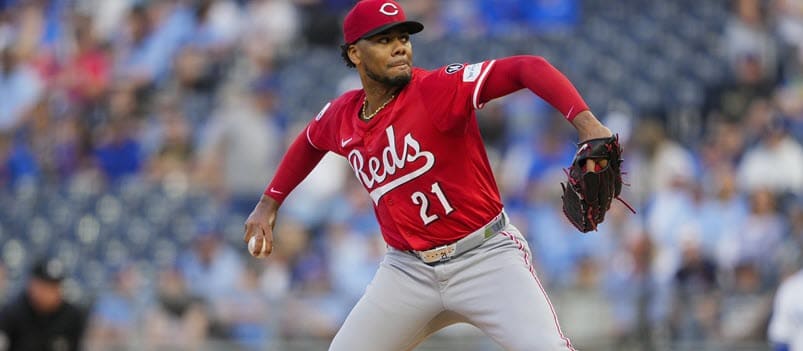
Leagues where wins AND quality starts are counted mean starters become even more valuable. If bonuses are given out for high strikeout tallies, you'll want to move up players like Reds starter Hunter Greene on your list.
The combining or dividing up of holds and saves can also create wild swings in rankings of relief pitchers, making it important to know your league set-up before taking on any strategy or approach to pitchers.
"In a points league, or in a Roto league where saves and holds are combined into one category, the addition of holds flattens the value of the reliever pool and means you don't lose much by waiting until the end of the draft," Halterman said. "In a Roto league with saves and holds as separate categories, though, the importance of relievers goes up, since they now matter for twice as many categories as they normally do."
It's why all managers should use RotoWire's custom fantasy baseball rankings by inputting their scoring settings to see how values change. Even small tweaks can make a major difference in rankings.
Building a Pitching Staff Around Starters
Starters will make up the bulk of your pitching roster. They rack up the most statistics from a volume standpoint, and they form a base for your ERA and WHIP to limit wild swings over the course of a week or season. It's important to grab a true ace in the first few rounds of the draft. You should look for ironmen who are projected to start 30 games. While it doesn't need to be a Cy Young winner like Paul Skenes or Tarik Skubal, you want to leave your draft with at least two top-15 starters.
It's also important to analyze your starters' strengths as the draft goes on and fill in where needed in the later rounds and stages. Check to see if you're strong in strikeouts, but weak in ERA. If your ERA is rock solid thanks to early-round drafting, you can focus on some more volatile pitchers who are going to rack up strikeouts.
It's also important to note that starters will be the one position you target on the waiver wire throughout the course of the year. Two-start pitchers in certain weeks, starters atop the MLB prospect rankings who get the call, and players who surprise early in the year will all be hot targets. So, even if you leave your draft without the starter stats you were looking for, it's a spot you can make up throughout the year.
Leveraging Relievers for Ratios, Saves and Flexibility
While relievers pale in comparison to starters in terms of importance, you'll want a few on your roster to compete in saves, holds or any other category. It often makes sense to pass on the biggest names, they often go far too early or are bid much higher than their fantasy baseball auction values.
Instead look for middle-of-the-road options who can contribute in strikeouts, ERA and WHIP, even if they're not going to lead the league in saves. In leagues that include holds, there are plenty of hidden gems who are contributors across the board, including San Diego's Jeremiah Estrada or Milwaukee's Abner Uribe.
"In medium and deeper leagues, it's often nice to have one elite setup man on your roster," Halterman said. "In weeks where enough of your starters have good matchups, you can keep him on the bench, but in weeks where that's not the case, you'll be happy to have someone who can throw two or three innings which help your ratios, and those sorts of pitchers often wind up with a handful of wins and saves by the end of the year."
If you do grab a top-tier closer early, avoid relievers until the last few rounds of the draft. If you wait beyond the early rounds for relievers, grab a couple in the middle rounds to have a solid foundation that includes some upside. Chances are you'll be plucking hot relievers who move up MLB depth charts throughout the season, which is another reason why you don't need to spend early.
Common Pitching Staff Construction Mistakes to Avoid
We can't stress enough that managers shouldn't be chasing saves unless there are massive point bonuses for them with unique scoring settings. In standard leagues, relievers simply don't make the impact that starters do. MLB teams are shifting away from traditional closers more and more, meaning even the top options like Edwin Diaz, Mason Miller and Josh Hader can be volatile.
On the starter side, try to look past wins when sifting through MLB projections. It's not an indicative stat of how well a pitcher performed, and it can be ruined by a poor bullpen performance or a pitcher's team not producing on offense. Strikeouts and ERA are a much better indicator of how a pitcher will impact your fantasy team over the course of the year.
You'll also need to be strategic about when you start building your pitching staff or how much you're bidding on top-tier talent. There's a fine line between protecting yourself from investing too much and waiting too long.
"One mistake is to wait too long to draft your rotation," Halterman said. "While waiting a bit to begin your rotation, to avoid the risk of losing one of your first few picks to a season-ending injury in April is a fine strategy, if you overshoot and miss out on all the tiers of reliable pitchers, you rob yourself of the chance of competing on the pitching side unless you nail every single pick."
Once you subscribe to RotoWire, their comprehensive fantasy baseball draft kit has a number of tools to get you familiar with both starters and relievers as well as players to target to maximize your pitching stats on draft day and beyond.