

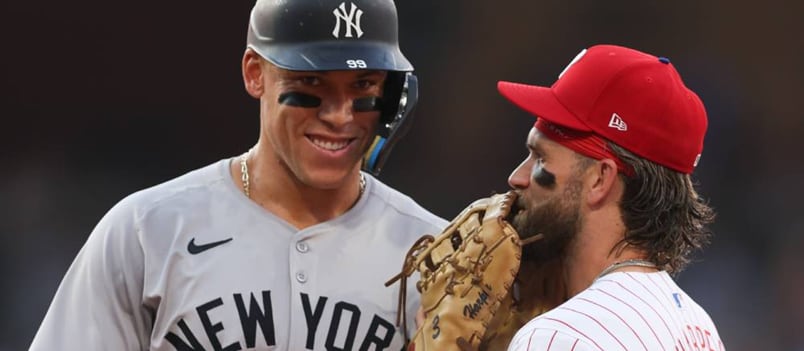





As the offseason winds down and spring training approaches, it is time to reset the MLB landscape. The  Los Angeles Dodgers enter the season seeking the league's first threepeat since the 1998 through 2000 Yankees. The rest of the league has visions of toppling the Dodgers' juggernaut, but it will not come easily as no team owns a projected win total within ten games of Los Angeles per DraftKings over/under lines.
How long can the Dodgers' dominance last? Who is set to challenge them atop the standings? What teams are on the upswing, and which ones look likely to take a step back? RotoWire.com analyzed it all in our state of the league rankings looking at each team's current window to compete for a championship. These rankings go beyond just projecting towards the upcoming season and attempt to find which organizations are best set up for sustained success over multiple years, though it is important to note that the current CBA expires after 2026 and a new one could potentially radically alter the structure of the sport as the financial imbalance between franchises continues to make headlines (not to mention the possibility of a lockout next season as a result of negotiations).
Visit RotoWire's baseball betting section for the latest MLB odds and futures and player props from various sportsbooks!
Methodology
To determine the championship windows, RotoWire.com created a holistic evaluation method that scored teams based on five factors: core player age/team control, farm system strength, payroll flexibility, organizational trajectory and divisional competitiveness.
Current core age and control accounted for the largest share of the formula, making up 30% of the results. We found the average age of each team's top five contributors by WAR and then looked at the length left on their contracts plus examined how many years any players in their pre-arb or arbitration seasons have before reaching free agency.
While having players locked up long-term helps extend windows, the current talent level of teams still reigned supreme when calculating when windows open. Farm system strength and payroll flexibility each account for 20% of the evaluation as more forward-looking components.
We used a combination of MLB Pipeline and Baseball America farm rankings to assess which organizations have the most young talent on the way then adjusted slightly for teams whose top prospects are closer to reaching the majors since proximity reduces uncertainty.
For payroll flexibility, we considered not only current spending levels but also how much long-term money is on each team's books as well as how close they are to the competitive balance thresholds. Ownership's past willingness to open the checkbook for players and pay any luxury taxes factored in here too.
The final two categories make up 15% apiece to complete the organizational picture. To account for team trajectory, we looked at their win total trend over the last three years along with the track record of their current front office, giving benefit to stability.
Finally, we weighed the strength of every division and each team's playoff path as not all roads to a title are created equal and some divisions are much stronger than others. Once these five factors were combined, it allowed us to create a confidence score reflecting the certainty of each projection. Here's how the league stands right now.
Tier 1: Window Wide Open (Dodgers, Braves, Orioles, Phillies)
These rankings do not contain a tier 0 but if they did the Dodgers would occupy it by themselves. The back-to-back champs have won at least 90 games in every full season since 2013 and that trend does not appear to be stopping anytime soon. The lineup is anchored by three future Hall of Famers in Shohei Ohtani, Mookie Betts and Freddie Freeman with a strong supporting cast around them. The rotation is full of frontline arms and the team went out and addressed its two biggest needs in free agency by adding Edwin Diaz and Kyle Tucker.
Ownership has shown the willingness to spend whatever it takes while Andrew Friedman leads an elite front office that combines small-market savvy on the margins with big-market financial muscle. Even without premium picks from years of success and luxury tax penalties, Los Angeles boasts one of the game's top farm systems thanks to their scouting and player development machine and almost all their stars are under contract through at least 2028.
How their core ages will be the biggest impediment to success beyond the next couple years as the Dodgers fielded the oldest team in the league last season and will likely do so again this year, though Los Angeles can absorb an albatross contract or two because of their natural advantages.
Braves, Orioles, Phillies In Prime Position
The three teams joining the Dodgers in tier one cannot match their decade-plus run but have all experienced recent highs and possess loads of proven talent under team control for multiple seasons. The Braves and Orioles both disappointed in 2025 but are positioned to bounce back to the strong form they showed the previous few seasons this year. Atlanta snapped a streak of seven consecutive playoff appearances last season amid injury woes and with better health luck should be back looking like the team from 2018-2024.
The  Braves' ability to sign their stars to long-term extensions provokes envy from the rest of the league and has left their balance sheet flexible enough to fill needs through shorter term free agent deals. Ronald Acuna Jr., Matt Olson, Austin Riley, Spencer Strider, Sean Murphy and Michael Harris II all have at least three years of team control remaining at luxury tax rates no greater than Riley's $21.2 million mark.
The Orioles have not been able to secure any extensions beyond Samuel Basallo yet, but Baltimore features maybe the best collection of under 30 position player talent in the league. Young studs like Gunnar Henderson, Adley Rutschman and Jordan Westburg helped power the Orioles to 101 wins in 2023 and 91 wins in 2024 and last year's step back seems to have induced urgency in the front office to supplement them with the help they need to return to that level. Baltimore reconfigured their rotation this offseason while trading for Taylor Ward and signing Pete Alonso to inject some more power into a lineup that saw no one hit more than 17 home runs last season.
City of Brotherly Love Still Alive
Meanwhile, the Phillies recorded the most regular season wins of their four-year run of playoff appearances last year and sit as the favorite to claim the NL East crown again according to DraftKings. Philadelphia's roster balance gives them an advantage over other contenders as most teams do not possess the amount of star power in both their lineup and rotation that the  Phillies can trot out.
However, Philadelphia's window looks slightly shorter than the teams above them due to the advanced age of their top players, though Bryce Harper, Kyle Schwarber, Trea Turner, Aaron Nola and Cristopher Sanchez are all signed for at least 5 more years. If they age gracefully, it will go a long way to extending the window, but if more of the core falls off like Nola did last year this roster could become an expensive dud in a few years' time.
Tier 2: Window Open (Guardians, Rangers, Yankees, Mets, Padres, Brewers, Diamondbacks, Mariners, Rays, Twins)
The teams in tier 2 can all capably contend over the next couple of seasons, though each show flaws that cap the ceiling on a potential extended run compared to the teams in tier 1. The Guardians, Brewers and Rays have long operated as three of the model small market teams in the league but always have to be mindful of budgetary constraints. All three are set to run bottom ten payrolls in the sport again this season after Cleveland and Milwaukee finished last year as the lowest spending playoff teams.
Cleveland's elite pitching development allows them to consistently field a stable of effective arms while the newly extended Jose Ramirez raises the floor on a lineup that lacks much punch otherwise. Milwaukee owns the second-best regular season record in the majors over the past three seasons and has won three consecutive NL Central titles but chose to trade ace Freddy Peralta to the Mets last month with only one year remaining on his contract. However, the trade netted the Brewers a pair of top 100 prospects to add to an already loaded farm system that rates as the best in the league by both ESPN and The Athletic.
Tampa Bay missed the playoffs for a second straight time last year after five consecutive trips between 2019 and 2023 and lacks the top end talent in their farm system that Milwaukee and Cleveland (six top 100 prospects per both MLB Pipeline and Baseball America) possess, but the Rays always maintain a depth of prospects and excel at churning over their 40-man roster to keep a steady stream of cost-controlled talent flowing.
2023 World Series participants Texas and Arizona have failed to recapture the magic of that season since then but both have the pieces to get back into the postseason picture if they can fix their issues on one side of the ball. The Rangers allowed the fewest runs in the majors last year but have scored almost 200 fewer runs than their championship team in each of the past two seasons.
The opposite problem exists in Arizona where the  Diamondbacks have ranked among the game's top offenses thanks to strong play from the likes of Corbin Carroll, Ketel Marte and Geraldo Perdomo, but have struggled to prevent runs. Arizona's current advantage over Texas comes financially, with their offensive core all locked up through the end of the decade and the Rangers facing harsh repeater penalties if they exceed the tax line with an older roster this year.
New to baseball betting? Check out the best baseball betting promos to find the sportsbook and sign-up bonus that's right for you!
New York, New York?
Both New York teams maintain tier 1 aspirations, although they lack the level of cheap talent that often sustains the longest windows. Still, foundational stars are in place in both spots, and their fiscal strength affords them more wiggle room than most. Despite the Dodgers superseding the Yankees as the league's preeminent superpower, New York has not posted a losing season since 1992.
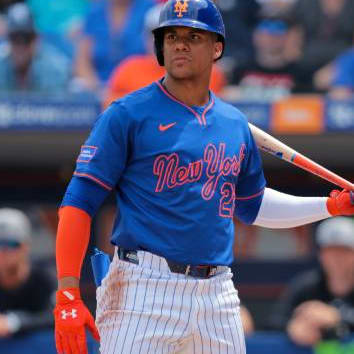
The Mets under Steve Cohen's ownership represent the nouveau riche kids on the block, ranking first or second in payroll every year since 2022. The results in Queens have not been as consistent as those in the Bronx, which fueled a flurry of action from the  Mets this offseason after the team missed out on the final NL Wildcard spot on a tiebreaker. Multiple long-time key players were traded or allowed to walk in free agency and replaced as the team attempted to reshape its identity. Building blocks Juan Soto and Francisco Lindor are signed into the next decade while new additions Bo Bichette, Marcus Semien, Devin Williams, Luke Weaver, Luis Robert Jr. and Jorge Polanco all come with two or three years of control, giving the Mets a clear timeline before they will need to retool again around Soto and Lindor.
The Yankees approached the offseason with more restraint, focusing mostly on re-signing their own players and shoring up the pitching staff. They own the top projected over/under win total in the AL per DraftKings and will add Gerrit Cole back from injury to an already strong front of the rotation. The lineup can become overly reliant on Aaron Judge at times, and this is one of the older teams in the league but the floor here is much higher than most places.
Padres, Mariners, Twins Have Hope
San Diego, Seattle and Minnesota each face unique circumstances they will need to navigate in order to maximize their current window. The Padres have punched above their market size economically for the past half decade but the death of owner Peter Seidler following the 2023 season has left a cloud of uncertainty over the franchise's future financial position. Payroll peaked that year and while it has still eclipsed $225 million every season since, the Seidler family appears likely to sell the team sometime this year, leaving no guarantees about what spending will look like under new leadership. Cornerstones Fernando Tatis Jr., Manny Machado, Xander Bogaerts and Jackson Merrill are all on the books through at least 2033, but the Padres' appetite for keeping them all around and continuing to surround them with other quality players rests squarely on the ramifications of any potential sale.
Fresh off the team's run to the ALCS, the Mariners enter 2026 primed for another successful season. Lineup stalwarts Cal Raleigh, Julio Rodriguez and Josh Naylor each have at least five years left on their contracts, though the clock is ticking on the cost-controlled pitching that has carried Seattle. Logan Gilbert, George Kirby and Bryce Miller have all reached different stages of arbitration, meaning the Mariners only have two seasons remaining with their current rotation. The farm system is strong, but what happens with the pitching staff will ultimately dictate Seattle's window.
Minnesota won the AL Central in 2023 but has seen its record slip in each of the past two seasons. The  Twins executed a sell-off at last year's trade deadline and ownership brought in several new partners after considering a full sale of the franchise and deciding against it. The team's spot in this tier is tenuous, though the decision to hang on to their three highest value pieces in Byron Buxton, Joe Ryan and Pablo Lopez plus their presence in a weak division keeps them here.
Tier 3: Window Opening (Reds, Royals, Tigers, Pirates)
Tier 3 features four teams poised to take a leap behind young talent coming into its own. The Reds squeaked into the playoffs last year for the first time since 2020 (and first 162 game season since 2013), though their 83 wins were the fewest of any playoff team since the 2006 Cardinals.
Andrew Abbott, Nick Lodolo and Hunter Greene, all of whom are 28 or younger and cost-controlled for several more seasons (Lodolo for two, Abbott and Greene for four), paced a pitching staff that finished second in the majors in bWAR. Unfortunately, the position players struggled to produce, ranking ahead of only Colorado in terms of non-pitcher bWAR with Elly De La Cruz and TJ Friedl accounting for over half the value. However, the majority of the lineup holds arb-1 or pre-arb status, and a couple of offensive breakouts could push Cincinnati into deeper contention for years when combined with the team's strong pitching.
Detroit reached the postseason each of the last two years, but the Tigers are positioning themselves to make a long-term run. Back-to-back Cy Young winner Tarik Skubal only has one year of team control, but Detroit recently signed Framber Valdez to a three-year deal to bolster the rotation. Like Cincinnati, Detroit's lineup is full of arbitration-level players or below and the Tigers farm system boasts four position players ranked among MLB Pipeline's top 40, headlined by number two overall prospect shortstop Kevin McGonigle who could debut this year. The team will need to settle the Skubal situation but otherwise the upcoming wave of talent should put the pieces in place for Detroit to hunt for its first World Series title since 1984.
AL Central On The Rise
The Tigers AL Central foes Kansas City orchestrated a 30-win improvement to make the 2024 playoffs, though the Royals fell from 86 to 82 wins last season. Bobby Witt Jr. has five years before he can opt out of the extension he signed in 2024 and the team extended breakout star Maikel Garcia for five years with a club option for a sixth in December. The pitching staff is on the older side, but Kansas City allowed the fourth fewest runs in the league last season and their top arms are under contract for multiple years. Still, this window revolves around having a transcendent prime-age player in Witt locked up for at least the next half decade.
The Pirates are the only one of the four tier 3 teams to not record a playoff appearance over the past couple seasons, but Pittsburgh might own the brightest future of the group. They control Paul Skenes for four more years with a strong supporting cast pitching beside him and more on the way. The team added Brandon Lowe and Ryan O'Hearn for short-term offensive help this offseason after the Pirates finished last in the league in OPS in 2025, but the real boost will come when the team's top prospect arrives. 19-year-old Konnor Griffin rates as the consensus number one prospect in baseball after slashing .333/.415/.527 with 21 home runs and 65 stolen bases across three levels in his first season of professional ball last year.
Some evaluators view Griffin as the top player to come through the minors in years, and Pittsburgh's system goes well beyond him with Baseball America ranking it as the sport's best farm system. It may take a year or two for all that talent to coalesce at the major league level and the Pirates have to navigate a notoriously cheap ownership, but something special could be brewing if this group is allowed to develop and grow together.
Tier 4: Window Closing (Astros)
The Astros inhabit their own tier as they face a period of transition. Although Houston won 87 games, last season marked the first time since 2016 the organization missed the playoffs. That ended an eight-year stretch that saw the  Astros reach seven consecutive ALCS's, four World Series and ultimately hoist two trophies in 2017 and 2022. The core of those teams has slowly started to break apart though, with Kyle Tucker and Alex Bregman departing after 2024 and Framber Valdez leaving in free agency this offseason.
Houston re-acquired Carlos Correa from the Twins at the trade deadline and Jose Altuve, Yordan Alvarez and Jeremy Pena all remain, but Altuve just posted his worst non-pandemic offensive season since 2013, Alvarez missed 114 games while recording a career low OPS and Pena only has two years of team control left. Hunter Brown emerged as an ace last year, but the rest of a once strong staff has begun to fall off, though the bullpen remains solid.
Houston still projects as a playoff team this season, but the Mariners sit as +110 divisional favorites over them according to DraftKings. This could be the Astros last chance for a run though as the roster is expensive and aging and the farm system is barren. The last Houston rebuild served as a model for tearing a team down to the studs and re-emerging loaded with assets a few years later and the time may be coming soon for it to happen again in Space City.
Mapping out your wagers for the week? Check out the latest Sportsbook Promo Codes to get special offers and make the most of your bets.
Tier 5: Uncertain (Blue Jays, Cubs, Red Sox)
Toronto, Chicago and Boston come into 2026 as clear contenders, but each will soon face an inflection point that could determine their path forward.
The Blue Jays came so close to winning the franchise's third World Series title last season and signed Dylan Cease to a seven-year deal in the offseason to aid in future pursuits, however they let Bo Bichette leave in free agency. George Springer, Kevin Gausman and Dalton Varsho will hit the market following the season further reducing the team's core. Even if they all depart, Toronto will still have ten contracts with a luxury tax hit of $10 million on the books after the season and the club will hit dreaded third year repeater status if they do not fall back under the tax line. Vladimir Guerrero Jr. is locked up through 2039, but the  Blue Jays will need to decide how much money they can stomach spending around him long-term.
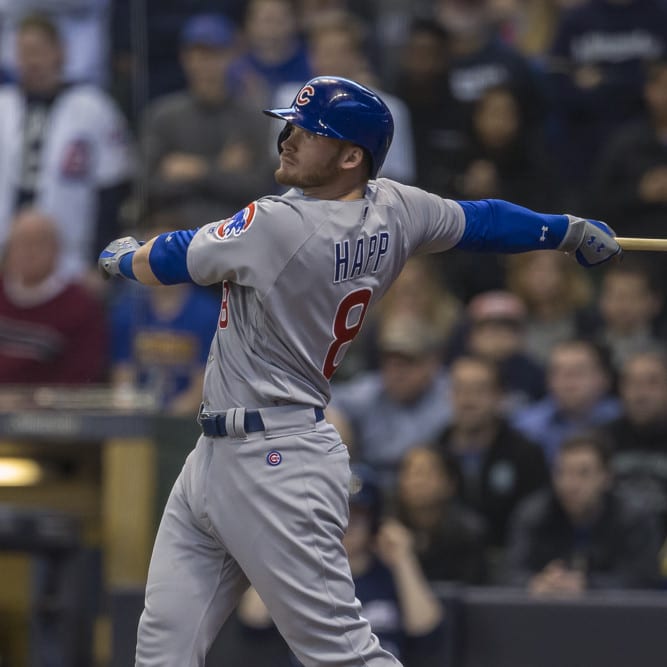
The Cubs returned to playoffs for the first time since 2020 last year and enter this season with their best roster on paper since their four-year run from 2015 to 2018. However, the team is littered with expiring contracts, leading to questions about what the club will look like in following years. Nico Hoerner, Ian Happ, Seiya Suzuki, Shota Imanaga, Jameson Taillon, Matthew Boyd, Carson Kelly and a host of relievers can all become free agents after 2026 (technically Boyd and Kelly have mutual options, but those are not typically picked up and are instead usually used as a tool to spread money to another fiscal year).
How Chicago approaches re-signing and replacing these players will shape the team's window beyond this season. The Cubs added Alex Bregman over the offseason and maintain a solid collection of pre-arbitration players, but the prospect of losing four starting position players and three starting pitchers is daunting. Chicago could see $100 million fall off the books and will need to reinvest it to stay competitive.
Keep Eye On Beantown
Boston is operating from a fascinating position right now. The Red Sox appear to be chasing two timelines in the most competitive division in baseball where everyone has dreams of contention. They signed Ranger Suarez and traded for Sonny Gray and Johan Oviedo to strengthen a suddenly stacked rotation that FanGraphs projects to lead the league in WAR with multiple top 100 pitching prospects waiting in the wings. An outfield glut still exists and could lead to an eventual Jarren Duran trade as the other options offer more cost control. Roman Anthony and Ceddanne Rafaela are signed into the 2030s while Wilyer Abreu is tied to the team through 2029.
Former top prospects Marcelo Mayer and Kristian Campbell also each offer at least six years of control on the infield, though they have yet to breakthrough like their outfield counterparts. Finances will likely determine whether the organization prioritizes youth or experience after this season as Boston is set to top the luxury tax line for a second straight year in 2026 and the team has historically refused to pay the tax three times in a row. Resetting the Red Sox tax clock would likely require trades from the big league roster as little money is scheduled to come off the payroll next year.
Try our DraftKings MLB Lineup Optimizer to discover more expert recommendations, customize the player pool, set exposure percentage and mass-enter DFS lineups.
Tier 6: Rebuilding (Giants, Cardinals, Nationals, Marlins, Angels, White Sox, Athletics, Rockies)
The final eight teams make up the bottom of the league with a mishmash of clubs intentionally taking a step back alongside those that are either too cheap and/or downright dysfunctional to field consistent winners.
The Giants are the only team in this group with an over/under line above 75.5 and even they sit at +215 to make the playoffs with an 80.5-win total according to DraftKings. San Francisco's roster figures to cost over $220 million this season for middling performance and the farm system is just okay with its highest levels of talent concentrated at the lower levels and far away from major league impact. Giants' ownership has demonstrated willingness to spend more than the rest of tier 6, but the team is currently caught in no-man's land despite having Logan Webb, Rafael Devers, Matt Chapman and Willy Adames all under contract for at least three more years.
St. Louis, Washington and Colorado all head into this season under the guidance of new front offices.
Can Bloom Bring Back St. Louis?
Chaim Bloom spent the past couple years advising long-time Cardinals president of baseball operations John Mozeliak before taking over for him at the conclusion of the 2025 season. Since gaining command of the top post, Bloom has shipped out Nolan Arenado, Willson Contreras, Brendan Donovan and Sonny Gray, signifying his intention to reshape the roster and give younger players a chance to prove themselves. The Cardinals' farm system includes six top 100 prospects per MLB Pipeline with top prospect JJ Wetherholt (number five overall) on the precipice of the majors after finishing the year in AAA and seeing Donovan moved to open playing time. Only three players on St. Louis's 40-man roster are over the age of 30 and payroll projects to be over $75 million less than last year, so the focus is clearly on the future for a franchise that was a model of long-term success under Mozeliak.
Nationals Have Long Way To Go
Incoming Nationals president Paul Toboni did not make the volume of moves that Bloom did, but he still signaled the failure of the previous regime's post-2019 World Series rebuild by trading MacKenzie Gore to Texas. Washington has not won more than 71 games since the title team and many of their young players have struggled aside from James Wood and CJ Abrams. Team payroll for the year projects at a shade under $73 million, just below the Cardinals and ahead of the Marlins for the league's second lowest mark. Toboni's clear focus on adding prospects in the Nationals offseason deals shows the team is firmly entrenched in asset acquisition mode.
Rockies Embrace Moneyball
Colorado finally looked outside the organization for its new personnel chief, but Paul DePodesta was out of the game for nearly a decade in the NFL with the Cleveland Browns. He will be tasked with overhauling a team woefully behind the rest of the league in terms of scouting and analytics while having to navigate the unique challenges of playing at altitude. The  Rockies just missed setting the MLB record for losses last season, finishing 43-119 and posting a modern era worst -424 run differential, and the outlook does not look much better this year. Roster turnover has been minimal and their 52.5 win over/under is 13 wins less than the next closest team, a bigger gap than the Dodgers have at the top. There is not much to look for on the horizon either as the farm system is considered one of the league's worst and the team's upcoming first round draft pick dropped to 10th overall as a result of MLB anti-tanking penalties. To say this is an uphill climb to contention is an understatement.
Hope In Miami?
The Marlins and Athletics rosters feature more intriguing talent than most in this tier, but the perpetual stinginess of ownership makes it hard to trust their long-term plans. Miami dealt from their surplus of arms this offseason, acquiring seven position player prospects in return for Edward Cabrera and Ryan Weathers, led by outfielder Owen Caissie who they received from the Cubs in the Cabrera trade. Caissie possesses substantial raw power that the team desperately requires as Kyle Stowers stands as the only player on the roster to record an above average OPS over more than 300 plate appearances last season. The Marlins need breakouts from their large collection of pre-arb players and five top 70 prospects to overcome their natural reluctance to spend.
The Athletics lineup suddenly looks deep after outstanding rookie seasons from Nick Kurtz and Jacob Wilson plus leaps from Tyler Soderstrom and Shea Langeliers. They are all controlled through at least 2028 along with Brent Rooker and Lawrence Butler, accounting for the club's top six hitters by bWAR. On the other hand, the team allowed 5.04 runs per game last year, the majors' fourth worst mark, and the pitching staff does not appear improved.
The  Athletics must address this issue or face the possibility of wasting their current crop of bats. The impeding relocation to Las Vegas also hangs over the team. Should the club continue to increase payroll in anticipation of the move (scheduled for 2028), it will go a long way to help them compete as most new spending would likely go towards pitching given the position players locked up for the foreseeable future.
Angels, White Sox In Familiar Places
Long two of the most hapless franchises in the league, the Angels and White Sox have failed to leverage their market size for good. While Los Angeles is not afraid to spend, past free agent contracts have bombed and resulted in the Angels failure to surround Mike Trout (and at one point Shohei Ohtani) with a contender. The franchise's farm system has routinely ranked among the sport's worst over the past decade plus thanks to a combination of poor scouting and aggressive promotions for the prospects they have hit on. The club currently holds just one top 100 prospect and will lose eight free agents after the year, many of whom were brought in on one year filler deals without much upside. Do not count on the 11-year playoff drought snapping anytime soon.
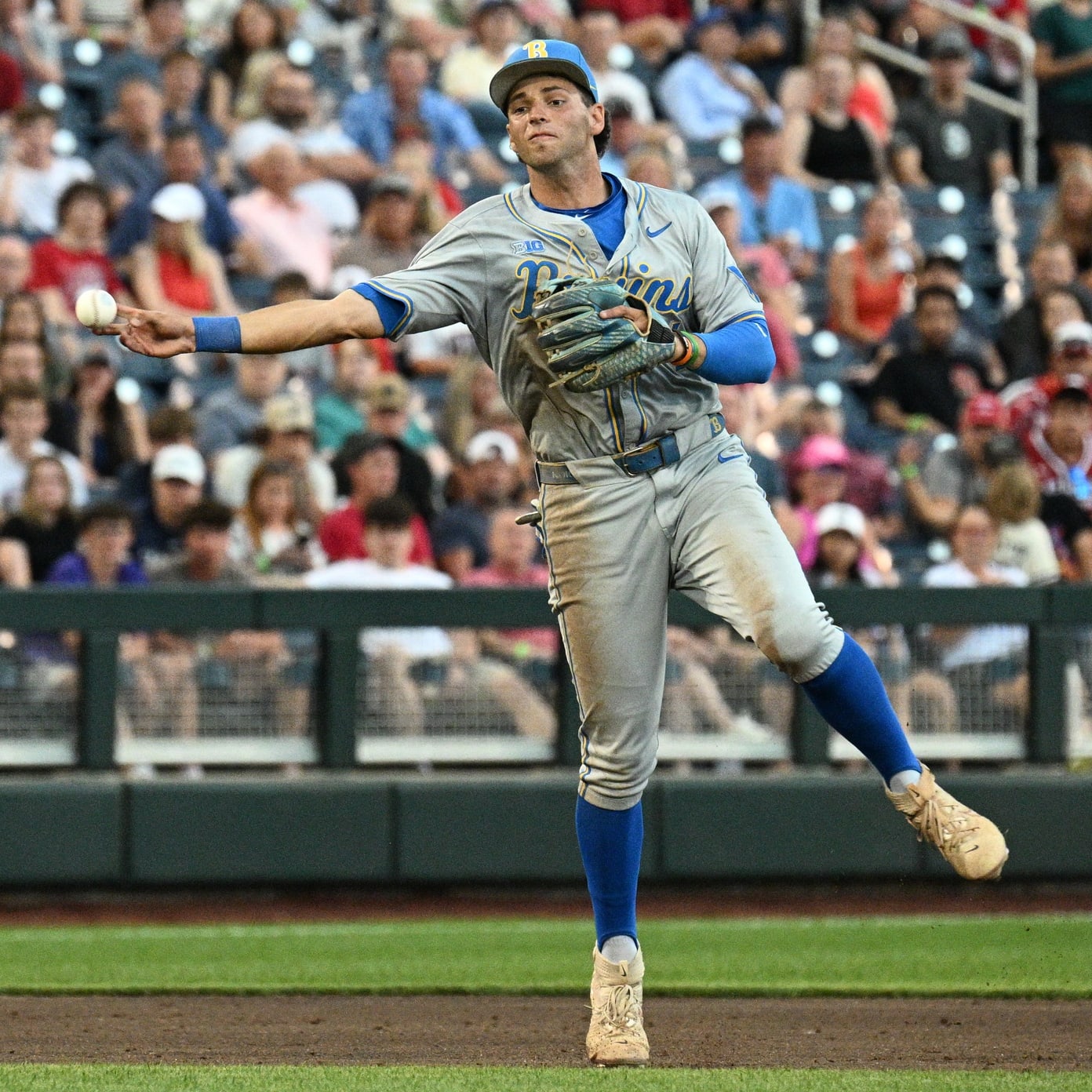
Two seasons ago, the White Sox lost a modern MLB record 121 games in a year of utter incompetence. Last year's team only won 60 games but that represented a 19-win turnaround, and the team OPS jumped .057 points. Most of the roster consists of pre-arbitration players and the franchise landed the number one pick in the 2026 draft after being ineligible to receive it last year. Projected top pick UCLA shortstop Roch Cholowsky is considered one of the top draft prizes in recent memory and adding him would instantly boost Chicago's system from average to well above average, not to mention what else they can do with an estimated approximately $17 million bonus pool. If ownership can stay out of the way, the bones of a future contender are here. They just need time to grow.
Can Anyone Catch The Dodgers?
So, to recap the league's hierarchy, the Dodgers' dynastic ambitions show no signs of slowing down while the Braves, Orioles and Phillies look like the biggest challengers to Los Angeles's long-term supremacy.
Both New York teams would love to get to that level but will need to do it relying on financial might rather than a surplus of young talent. The window is closing on Houston and teams like San Diego, Tampa Bay and Texas might not be far behind them depending on how their economic situations shake out.
The Blue Jays, Cubs and Red Sox all will field squads with championship aspirations this year but face massive decisions come next offseason. The AL Central remains wide open for the future with Detroit and Kansas City on the rise, Cleveland still solid, the White Sox looking potentially feisty in a few years and Minnesota hanging on to possible contender status by a thread. In the NL Central, Cincinnati and Pittsburgh should take a step up while the Cardinals begin the rebuilding process.
Watch out for other rebuilds from the Athletics and Marlins if they can address their weaknesses on one side of the ball. And do not discount what Washington can do in a few years given their market size and spending history. Now let's wait for those two words we all long to hear: play ball.