






This article is part of our Collette Calls series.
I hope you enjoyed the first round of these predictions and that it got you re-thinking how you have valuated those players in your completed drafts as well as any drafts you are planning for in the coming weeks. This week, I will be reviewing the following ten players in the AL East. The table below shows their ADP from the 42 Draft Champions drafts completed over at NFBC.com since November 1. There will be predictions applicable to the shallowest of mix leagues as well as deep AL-Only leagues and 50-round draft-and-hold formats.
Player | ADP | Min Pick | Max Pick | # Picks |
|---|---|---|---|---|
27 | 17 | 35 | 42 | |
111 | 45 | 205 | 42 | |
140 | 103 | 224 | 42 | |
201 | 152 | 256 | 42 | |
205 | 157 | 240 | 42 | |
231 | 184 | 265 | 42 | |
258 | 180 | 333 | 42 | |
422 | 355 | 547 | 42 | |
696 | 531 | 724 | 24 | |
746 | 614 | 749 | 5 |
Let's get bold out of the gate, shall we?
Baltimore
Last Year: Jordan Westburg is the highest-rated second baseman at season's end (1 star)
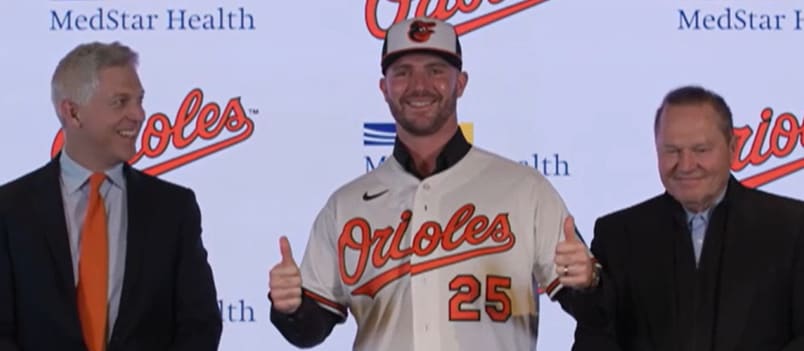
This Year: Pete Alonso does not hit more than 30 home runs
PROJECTION | HR | RBI | R | SB | AVG |
|---|---|---|---|---|---|
RotoWire | 39 | 112 | 90 | 2 | .248 |
Steamer | 35 | 101 | 88 | 3 | .254 |
THE BAT | 37 | 101 | 91 | 3 | .249 |
The only time Alonso has failed to hit at least 34 home runs in a season was during the Covid season of 2020, a season in which
I hope you enjoyed the first round of these predictions and that it got you re-thinking how you have valuated those players in your completed drafts as well as any drafts you are planning for in the coming weeks. This week, I will be reviewing the following ten players in the AL East. The table below shows their ADP from the 42 Draft Champions drafts completed over at NFBC.com since November 1. There will be predictions applicable to the shallowest of mix leagues as well as deep AL-Only leagues and 50-round draft-and-hold formats.
Player | ADP | Min Pick | Max Pick | # Picks |
|---|---|---|---|---|
27 | 17 | 35 | 42 | |
111 | 45 | 205 | 42 | |
140 | 103 | 224 | 42 | |
201 | 152 | 256 | 42 | |
205 | 157 | 240 | 42 | |
231 | 184 | 265 | 42 | |
258 | 180 | 333 | 42 | |
422 | 355 | 547 | 42 | |
696 | 531 | 724 | 24 | |
746 | 614 | 749 | 5 |
Let's get bold out of the gate, shall we?
Baltimore
Last Year: Jordan Westburg is the highest-rated second baseman at season's end (1 star)
This Year: Pete Alonso does not hit more than 30 home runs
PROJECTION | HR | RBI | R | SB | AVG |
|---|---|---|---|---|---|
RotoWire | 39 | 112 | 90 | 2 | .248 |
Steamer | 35 | 101 | 88 | 3 | .254 |
THE BAT | 37 | 101 | 91 | 3 | .249 |
The only time Alonso has failed to hit at least 34 home runs in a season was during the Covid season of 2020, a season in which he was on pace to hit 60 home runs. I am leaning on previous history with some recent examples on this prediction. You will likely remember previous references to The SMART System and The Rules of Engagement from good friends Glenn Colton and Rick Wolf. The Third Rule of Engagement states:
Do not pay big bucks for free agents who signed big contracts to play in a new city. Adjustments (to a new city, new teammates, new place to live, etc.) take a couple of months and as a result, year-long stats suffer. Alex Bregman signed a three-year, $120M deal with the Red Sox. Boston fans are tough and he tried to adjust to playing with Rafael Devers wanting his position. He hit just 18 home runs after hitting more than 24 each of the last three years. Represents about 25% down swing so fits that there should be a discount needed to roster a player like that. There have been exceptions to this rule, like J.D. Martinez arriving in Boston and blowing up the stats sheet, but they are exactly that — exceptions.
I've played (and often lost against) those two, often enough to not be dismissive of such advice. I was also curious about the numbers behind the advice, so I decided to dig in specifically to big-contract signings involving other first basemen over the past 20 years to see how that player did in the first year of their new contract.
| Player | Team | TYPE | Contract | 1st Yr HRs | Previous Yr HRs | Diff | Prev 5 Yr AVG |
|---|---|---|---|---|---|---|---|
| Mark Teixeira | NYY | Free Agent | 8 yrs / $180M | 39 | 33 | 6 | 35 |
| Ryan Howard | PHI | Extension | 5 yrs / $125M | 14 | 33 | -19 | 41 |
| Prince Fielder | DET | Free Agent | 9 yrs / $214M | 30 | 38 | -8 | 40 |
| Albert Pujols | LAA | Free Agent | 10 yrs / $240M | 30 | 37 | -7 | 39 |
| Joey Votto | CIN | Extension | 10 yrs / $225M | 6 | 24 | -18 | 26 |
| Miguel Cabrera | DET | Extension | 8 yrs / $248M | 38 | 18 | 20 | 32 |
| Chris Davis | BAL | Extension | 7 yrs / $161M | 38 | 47 | -9 | 40 |
| Eric Hosmer | SD | Free Agent | 8 yrs / $144M | 18 | 25 | -7 | 19 |
| Freddie Freeman | LAD | Free Agent | 6 yrs / $162M | 21 | 31 | -10 | 31 |
| Matt Olson | ATL | Free Agent | 8 yrs / $168M | 34 | 39 | -5 | 32 |
| Kris Bryant | COL | Free Agent | 7 yrs / $182M | 5 | 25 | -20 | 27 |
I eliminated Paul Goldschmidt from this list because his first year came in 2020. This group averaged seven fewer home runs in the first season of their new deal than they had hit the previous season. Votto and Bryant dealt with injuries their first seasons, so removing them reduces the average to 4.3 fewer home runs. Cabrera is on the other end of the bell curve, because he missed 40-plus games the season before his new deal due to injury, otherwise Teixeira would likely be the only player to see his home run total improve in the first year of the new big contract.
Alonso hit 38 home runs last year, so even the high end of the average here still gets him over my bold prediction. This will be a new city, a new division, with newer parks and newer pitchers to learn. There is a lot of new involved here, and the track record for big-contract first basemen tells us to expect a reduction in homers, yet the projections for him are not currently reflecting this possibility. Think different. This could be this year's version of my Pete Crow-Armstrong prediction from last year, but I am willing to make it.
Last Year: Nobody in the Baltimore bullpen saves 20 games (4 stars)
This Year: Ryan Helsley is a top-3 closer
Projection | W | SV | ERA | WHIP | K |
|---|---|---|---|---|---|
RotoWire | 4 | 27 | 3.58 | 1.22 | 58 |
Steamer | 3 | 25 | 3.47 | 1.22 | 76 |
THE BAT | 3 | 0 | 3.82 | 1.21 | 44 |
Since signing with the Orioles, Helsley is the 10th closer by ADP, trailing the likes of Edwin Diaz, Mason Miller, Andres Munoz, Cade Smith, Jhoan Duran, David Bednar, Aroldis Chapman, Josh Hader and Devin Williams. I made this prediction with Andres Munoz last year and it played out well. Helsley, unlike Munoz, does have some in-house competition for the role, as both Keegan Akin and Andrew Kittredge have displayed some skills, so let's look at how the trio stacks up with one another at a skill level:
| Pitcher | IP | K-BB% | Z-Contact | Stuff+ | Location+ | Pitching+ |
|---|---|---|---|---|---|---|
| Akin | 63.1 | 9.7% | 86.9% | 103 | 97 | 97 |
| Helsley | 56.0 | 15.1% | 86.1% | 127 | 95 | 119 |
| Kittredge | 53.0 | 25.5% | 87.6% | 101 | 108 | 111 |
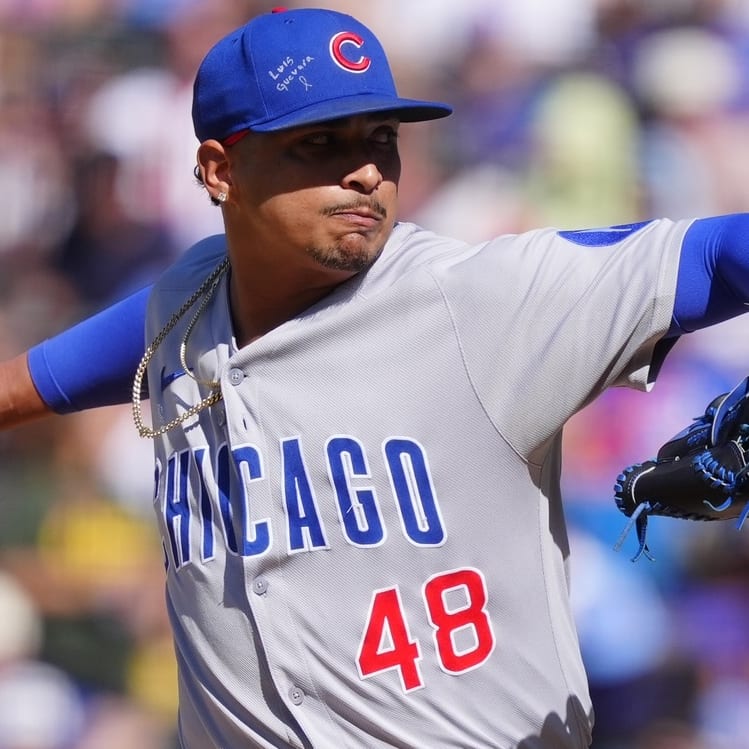
Akin took a step back in 2025 from his terrific 2024 season, but Kittredge took a step forward in his time between Baltimore and Chicago last season, especially with the Cubs. Kittredge executes a simple plan of well-located sinkers and sliders, with four-seamers to change the eye level as needed. Akin lost his feel for the strike zone last season and saw a significant decline in his strikouet rate, while his walk rate doubled and his home run rate also worsened.
Helsley had two different seasons: one where he was a successful closer for the Cardinals and another where he was a disastrous middle reliever for the Mets. I am willing to chalk up the latter to him moving out of the full-time closer role for the first time in three seasons along with the shift to a brand new market. I will also admit the 2025 Helsley in St. Louis was not the same one we saw in 2024 in terms of outcomes, but a 50-point spike in BABIP along with a few more walks and homers allowed will do that to a guy. Helsley's slider was still fantastic, holding batters to a .140 average with a 42 percent whiff rate, but his four-seamer was so hittable it was almost as if he was telling batters it was coming, as they hit .422 off the pitch. Helsley later admitted he was likely tipping his pitches later in the season, which could help partially explain why his 100 mph heater was more hittable, but he did fall into more predictable counts, necessitating more predictable fastballs.
New manager Craig Albernaz is already on record saying Helsley is the club's closer for the season and that he does not want to move him around in roles. Helsley, from 2022 to 2024, had the third-best ERA of all closers while compiling 19 wins, succesfully closing out 90 percent his his 91 save opportunities in that time. Compare this to David Bednar, who pitched to a 5.77 ERA in 2024 after dominating the previous two seasons, and then found himself back in Triple-A a week into the 2025 season when everything went poorly for him opening weekend. Bednar adjusted things, came back with a vengeance, and is now going in the top 50 overall.
Reliever volatility is something nearly every reliever goes through, some worse than others. Helsley still has the raw talent, and now he has the opportunity in Baltimore to right the ship much like Bednar did last year once he was recalled from Triple-A. Helsley is going a full round later than everyone in front of him and is someone I feel quite comfortable taking on the 5/6 turn of a 12-team draft rather than jumping in on the front end of that predictable fourth-round closer run.
Boston
Last Year: Kristian Campbell is a top-15 second baseman (1 star)
This Year: Romy Gonzalez is a top-24 second baseman
PROJECTION | HR | RBI | R | SB | AVG |
|---|---|---|---|---|---|
RotoWire | 8 | 36 | 34 | 8 | .245 |
Steamer | 10 | 40 | 38 | 8 | .272 |
THE BAT | 11 | 44 | 47 | 12 | .260 |
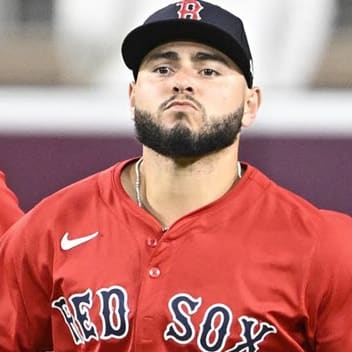
I swung and missed at this same spot last season, so I am coming back to it again because the multi-positional Gonzalez is very appealing to me in 2026 after watching what he did last year in Boston and seeing him play several times live when he was assigned to the Charlotte Knights while in the paler of the Sox organizations.
Simply put, Gonzalez makes good contact as a hitter, and I'm not quite certain why a horrendous 2024 White Sox team simply waived the player before the season started so Boston could freely pick him up. Gonzalez has a 118 OPS+ in his time with Boston, with last year being the better of the two seasons as he worked his way into the Boston lineup at three different positions and showed more against righties than he had in previous seasons, earning him more playing time. The .372 BABIP against righties certainly helped him in that regard, but not all BABIP is luck. Sometimes hitters who make quality contact make their own luck, and Gonzalez did just that in 2025:

Sure, he's rather impatient at the plate, but look at all the red up there in all the right spots for someone who has yet to hit double-digit homers in a season. Gonzalez qualifies at two positions on draft day and is going in the 28th round on average in drafts. I took him 399th overall in my most recent Draft Champions league for his versatility and upside because I find him to be one of the more currently undervalued players at second base, with a lot of room to rise up the end-of-season rankings at a position with a high level of uncertainty once you get outside the top 15. It's important to see how he looks in spring training, as he did end the season with some shoulder sorness, but Alex Cora has already said it's an open competion at second base between Gonzalez, David Hamilton and Kristian Campbell. Each player still has options remaining (so why did Chicago waive him??!!), so the position will be earned on merit rather than circumstance, and Gonzalez's 2025 season gives him a big leg up on the younger players.
Last Year: Kutter Crawford is a top-60 pitcher (1 star)
This Year: Connelly Early is a top-60 pitcher
Projection | W | SV | ERA | WHIP | K |
|---|---|---|---|---|---|
RotoWire | 9 | 0 | 3.58 | 1.18 | 113 |
Steamer | 4 | 0 | 3.71 | 1.30 | 66 |
THE BAT | 4 | 0 | 3.82 | 1.24 | 59 |
I watched Early pitch a few times last season and he passed my eye test in spades. I took him at $6 in the XFL draft in early November, and I enjoyed what James Anderson and Eno Sarris had to say about Early on a November episode of the RotoWire Fantasy Baseball Podcast:
Early got to the majors and struck out 29 batters over the four starts he made, including 11 in his major-league debut, while not allowing a home run. He made his major-league debut while pitching in Sacramento and looked like this:
Early's final 2025 numbers saw him strick out 161 batters in 119.2 innings with 44 walks and 5 home runs between Triple-A and the big leagues. He is currently sitting just outside the top 200 because of the current depth of the Boston starting rotation, but where there's confusion, there's opportunity.
Our depth chart shows all the following names in the starting pitcher list for Boston, and the table below also includes how many options, if any, each pitcher has:
STARTING PITCHER | OPTIONS |
|---|---|
0 | |
0 | |
2 | |
0 | |
2 | |
3 | |
3 | |
2 | |
1 |
Crochet and Gray are obviously locks, and I would say the same thing about Sandoval, as the club gave him a two-year deal prior to last season knowing he would very likely miss all of 2025. $18.25 million is not a showstopper amount, but that would be an expensive rehab for any club even with rising insurance costs these days. Sandoval has the leg up on everyone else because he is out of options and because the club will likely want something in return for the investment in his arm. Everything behind those three is wide open so let's look at the displayed skills of the others from 2025:
| PITCHER | IP | K-BB% | Z-CONTACT | STUFF+ | LOC+ | PIT+ |
|---|---|---|---|---|---|---|
| Early | 19.1 | 31.6% | 77.8% | 98 | 108 | 107 |
| Harrison | 35.2 | 15.4% | 80.9% | 97 | 112 | 103 |
| Tolle | 16.1 | 14.9% | 79.3% | 119 | 92 | 109 |
| Oviedo | 40.1 | 11.2% | 78.3% | 102 | 91 | 96 |
| Bello | 166.2 | 9.3% | 90.1% | 96 | 101 | 98 |
Bello threw more innings than the other four combined yet was also the easiest pitcher to make contact with and had the lowest K-BB%, which is a powerful leading indicator of pitching success. The fact Bello has thrown 150-plus innings for Boston in each of the past three seasons likely locks him into a spot as long as Boston does not go out and make another deal, as they've already dealt away both Hunter Dobbins and Richard Fitts this winter in separate deals. That likely leaves one spot in the rotation on Opening Day assuming everyone is healthy, and I am chasing Early's upside within this confusion. Putting my money where my mouth is, I took Early 207th overall in the aforementioned Draft Champions league, ahead of the likes of Andrew Abbott, Kris Bubic, Shane McClanahan, Bryce Miller, Aaron Nola and Matthew Boyd.
New York
Last Year: Austin Wells is not a top-20 catcher (1 star)
This Year: Jose Caballero wins the AL stolen-base crown for a third consecutive season
PROJECTION | HR | RBI | R | SB | AVG |
RotoWire | 8 | 39 | 49 | 31 | .230 |
Steamer | 6 | 29 | 36 | 30 | .226 |
THE BAT | 7 | 23 | 46 | 33 | .215 |
Caballero, in winning the AL stolen base crown last year, became the first player since Whit Merrifield to successfully defend a stolen base crown in either league, as Merrifield led the AL in both the 2017 and 2018 seasons. The last player to throw up a three-peat was Michael Bourn, who did so from 2009 through 2011. I believe Caballero is well-positioned to match that feat this season.
Caballero is currently predicted to be the starting shortstop for the Yankees only because the club and pundits are not quite certain whether Anthony Volpe will be ready to start the season. While we're on that topic, I would also be very much in on a Volpe rebound if the opportunity presented itself in drafts as I do believe the shoulder troubles were a big part of his offensive struggles last season. Caballero, even in a reserve capacity, should have his opportunites to run on a roster that has multiple players with checkered health histories.
Caballero had 137 opportunities to steal a base last season, and attempted steals in 60 of those situations, which is a 44 percent rate. He ran 43 percent of the time when managed by Kevin Cash as a mostly full-time player but increased that a bit to 46 percent under Aaron Boone in the 40 games he played in pinstripes after the trade deadline. He was 81 percent successful with Tampa Bay and 83 percent successful with New York, well above the league average of 76 percent last season. He should once again have a license to run when in the starting lineup or when inserted in the late innings to replace lawn ornament known as Giancarlo Stanton. Anyone with a career stolen base success rate of 80 percent is entitled to such a green light, and that's why I believe Caballero is a must-add this season as he qualifies at four positions on draft day and will likely pick up a fifth in season while he looks for his three-peat.
Last Year: Clayton Beeter is a top-200 pitcher (1 star)
This Year: Gerrit Cole makes fewer than 20 starts and throws fewer than 120 innings
Projection | W | SV | ERA | WHIP | K |
RotoWire | 7 | 0 | 3.04 | 1.06 | 93 |
Steamer | 8 | 0 | 4.00 | 1.22 | 133 |
THE BAT | 8 | 0 | 4.11 | 1.17 | 127 |
If you are are a regular reader or listener of my work, you know I really dislike rostering pitchers coming off Tommy John surgery unless they are at least 18 months out from that surgery. In the case of Cole, I'm doubly concerned, because have a very small sample of pitchers his age recovering from the procedure.
A look at Joe Roegele's great surgery tracker shows us all the surgeries over the years and if you sort by age, you will quickly notice there are very few starting pitchers age 34 or older on the report, as it's mostly relievers in that age bracket. I find four starting pitchers on the list who were similar in age to Cole when he had his surgery. They're listed below alongside the number of months it took for them to get back on the mound:
- Jacob deGrom: 15 months
- Justin Verlander: 14 months
- Jason Marquis: 14 months
- Wade Miley: 13 months
Verlander's and Marquis' recovery time involved an entire offseason, as both had their surgeries in the middle of the year. Cole had his March 11, so we are looking at him returning to a major-league mound anywhere between the parental holidays in May and June. Cole has been taken as high as 126th overall in one draft and is currently going a round ahead of Joe Musgrove, who had his surgery five months earlier than Cole did.
This is assuming Cole returns with the same type of pre-surgery command of his stuff, which we know is rarely the case with Tommy John surgeries because command is the last thing that comes back. Verlander made 28 starts with outstanding numbers when he returned from his surgery, but he had his surgery on September 30, 2020 and missed all of 2021, so he was very well rested for the 2022 season. DeGrom pitched very well last season in his first full season back from his surgery, but his surgery was on June 12, 2023, and he essentially had a full offseason of rest before last season since he pitched 10 innings very late in 2024.
If we could assume we would be receiving elite, Cole-like production in a limited sample size in 2026, it would be one thing. However, we may not begin to see the level of production we expect from Cole until after the break, and by then, your fantasy season may already be over if you jumped on the upside while passing on some of the safer options with volume going later in the draft.
Tampa Bay
Last Year: Jonathan Aranda is a top-250 player (5 stars)
This Year: Richie Palacios is a top-350 player
PROJECTION | HR | RBI | R | SB | AVG |
RotoWire | 3 | 10 | 12 | 3 | .247 |
Steamer | 5 | 24 | 35 | 9 | .239 |
THE BAT | 5 | 27 | 33 | 8 | .233 |
Remember, Palacios is currently outside the top 600 by ADP and even went undrafted in my most recent Draft Champions league. Truth be told, he had sat in my queue for five rounds, but I didn't want an eighth player from Tampa Bay on my team at that point and went with Maximo Acosta with my final pick over Palacios. I may regret that decision if Palacios does what I believe he's capable of doing.
The trade of Brandon Lowe to Pittsburgh leaves a gaping hole and opportunity at second base. Trust me when I tell you Jonathan Aranda cannot fill that void, as it was his horrendous defense and footwork which got him moved off the position in the first place. Taylor Walls could technically play the position, but he is Temu Mark Belanger in every aspect and really should be on the bench. There is not a prospect ready to come up from Durham, so unless the club either goes out and makes the long-rumored deal for Ketel Marte, makes a deal for another second baseman, or waits for the price point on someone like Willi Castro to come down, Palacios is the man for second base. He has over 300 innings logged at the position as a major-league player and another 975 innings as a minor leaguer.
Palacios is currently projected as the leadoff hitter for the Rays and is the best fit on the roster for that role for a few reasons: a career 11 percent walk rate, his .353 on-base percentage in his two seasons with Tampa Bay, and the fact he has quietly gone 27-for-28 stealing bases in his career, including 23-of-24 as a Ray. So, we have someone who comes into the draft as an outfielder but will pick up second-base eligibility in April, who gets on base a lot, runs very well, and hits in front of a double-play risk like Yandy Diaz, so he'll likely be put in motion to help avoid the double play often.
We saw this play out in 2024, when he reached base at a .346 clip and he was 19-for-20 on the bases in just 92 games. Injuries and setbacks kept him off the field way too often in 2025, but the desirable skills are still there. I believe giving Palacios the leadoff role will allow him to accentuate his best skills while abandoning hopes of tapping into more power, becoming an all-fields hitter who will be utilized heavily by Kevin Cash on the bases like the equally efficient Josh Lowe was in his breakout season of 2023. If someone is going to block my earlier prediction of Caballero successfully pulling off a three-peat as stolen base champ, this is my darkhorse candidate to do that.
Last Year; Drew Rasmussen is a top-10 closer this season (3 stars)
This Year: Osvaldo Bido is a top-250 pitcher this season
Projection | W | SV | ERA | WHIP | K |
RotoWire | 0 | 0 | 4.50 | 1.35 | 18 |
Steamer | 1 | 0 | 4.35 | 1.29 | 13 |
THE BAT | 1 | 0 | 4.97 | 1.43 | 10 |
Yes, I did use Bido last year with the Athletics. Yes, he had a horrendous season last year, but hear me out. I like to provide something of value for all league sizes in this series, and this one is strictly for the AL-only crowd because I do believe there is still good in Bido despite what we saw last year. Let's revisit what I said about him last winter:
Bido then pitched in a swingman role for the big-league club, winning five of his nine starts, including four quality starts. He struck out 63 in 63.1 innings and drastically reduced his home run rate, as he allowed just three homers at the big-league level. His slider is his best pitch by stuff metrics, but he throws five different pitches to both righties and lefties while preferring changeups to lefties and sinkers to righties. Bido's four-seamer performed particularly well last season, with a .203 average (.172 xBA) and a 28.7 percent whiff rate, compared to 2023 when that same pitch had a .358 average (.278 xBA) with a 27.0 percent whiff rate. The Athletics had Bido dial back his slider usage and encouraged him to throw more four-seamers, and with that whiff rate, it's easy to see why. What really jumps off the page for Bido is that four of his five pitches had batting averages against of .203 or lower, with only his sinker suffering damage.
Well, none of that happened as just about everything he threw was hittable, and then some. The biggest problem for Bido is he allowed 19 home runs in 79.2 innings of work, 13 of which came while pitching in Sacramento. That environment was as bad for him as the Oakland environment was perfect for him. The Athletics had Bido throwing his worst pitch, his sinker, nearly 20 percent of the time at home in an attempt to solve the home runs, while the usage rate on that pitch was nearly halved when he pitched on the road. The league hit .310 against him at home and .279 in other parks. I cannot explain away the walks, but getting out of Sacramento alone is an upgrade for Bido.
Now, he gets to go to a park more closely aligned to the offensive supression the Oakland Coliseum offerred, and has a pitching coach with a track record of helping maligned pitchers make improvements. The image below is what his 2024 BaseballSavant profile looked like prior to last season:

I submit to you that if I put that profile up anonymously to gauge your interest, many of you would not be so dismissive. I'll be looking at Bido in the end game in my AL-only leagues once again this season as he's out of options and has the arm, experience and previous success to work out of the pen or the rotation as needed. If that aforementioned Marte deal ever happens, it likely frees up room in the rotation, because there's no way that deal happens without Ryan Pepiot or Drew Rasmussen being moved.
Toronto
Last Year: Steward Berroa is a top-150 outfielder (1 star)
This Year: Daulton Varsho is a top-25 outfielder
PROJECTION | HR | RBI | R | SB | AVG |
RotoWire | 20 | 62 | 60 | 8 | .228 |
Steamer | 23 | 66 | 66 | 7 | .227 |
THE BAT | 29 | 77 | 77 | 10 | .223 |
This lifetime .227 hitter isn't going to be a five-category contributor without some serious batted ball luck, and since he's never had a BABIP over .289 in any season, I'm not expecting that to happen this year, either. Besides, extreme flyball hitters will not have high BABIPs because ideally their flyballs are leaving the yard and aren't "balls in play". However, I particularly liked what I saw from Varsho in the power department last season coming off rotator cuff surgery. A career-high flyball rate helped him hit one of every five flyballs out of the yard and led to 20 homers in just 71 games played.
Varsho missed so much time due to his recovery from the aforementioned surgery, and then a right hamstring strain cost him another large chunk of time and reduced his willingness to steal bases. Around all that, he set career highs in barrel rates while maintaining top 25th percentile indicators in the right areas, including his speed and, more importantly, defense. Varsho's defensive abilities are going to keep him in the lineup as often as possible because nobody else on the roster can play center field defense like he can, and while extra exposure to lefties will further limit any batting average recovery, the extra volume will offer him more opportunities to produce at the level he was doing in 2022 and 2023 across all four counting categories, with room for improvement.
2026 is also Varsho's final year before free agency, and he would love nothing more than to put up a career year in terms of run production to help position himself on the open market for next winter. He was pacing toward that career season last year around the injuries after making some changes to his swing mechanics and tapped into career highs in average exit velocity and barrel rates. I'm excited to see what he can do with a full season that doesn't involve recovery from surgery and to see how the motivation of his next contract will affect his performance in 2026.
Last Year: Kevin Gausman is not a top-80 pitcher (1 star)
This Year: Trey Yesavage is not a top-80 pitcher
Projection | W | SV | ERA | WHIP | K |
RotoWire | 11 | 0 | 3.78 | 1.22 | 125 |
Steamer | 9 | 0 | 3.82 | 1.28 | 162 |
THE BAT | 8 | 0 | 4.19 | 1.26 | 125 |
Yesavage is currently the 57th pitcher off the board and is being taken in front of the likes of Shane Bieber, Michael King, Gavin Williams, Drew Rasmussen and Robbie Ray, but one year removed from the Bowden Francis experience, count me out at that market price.
Yesavage has done nothing but succeeed everywhere he has pitched since his sophomore season at East Carolina. He was 18-2 over his final two seasons there, and I even got to witness him shut down South Florida while on a trip over for my godson's graduation in that time. After working 93.1 innings in 2024 as a collegian, he reported to A-ball to begin 2025 and ended up pitching in the World Series by season's end. In all, Yesavage worked 129.2 innings between all four levels of the minor leagues, the majors and the postseason. It's been said every postseason inning can be considered 1.5 innings due to the pressure and stress, so let's bump up his overall workload to 140 innings of work, which gives him a 50 percent jump year-over-year at age 22.
I was admittedly impressed watching how he bounced back in the fifth game of the World Series to absolutely dominate the Dodgers after a rough outing in the first game of that series and how he similarly recovered against Seattle in the sixth game of the ALCS after a rough outing in the second game. Yet, I am troubled by the fact this is still a three-pitch pitcher, albeit with an incredibly nasty splitter and a wrong-way slider which both play very well off his extremely high release point and arm angle. Francis did not have the postseason spotlight on him that Yesavage did, but he, too, was someone who had success with a splitter and a breaking ball until his command began to waiver. He came down with shoulder problems last season that pulled all his results down and, ironically, became a driver in Yesavage's rapid ascent through the minors.
I may look silly fading someone who struck out 176 batters while walking 48 in 112 regular-season innings last season, but I'm concerned about the extended stress of a season that saw him pitch much longer than most 22-year-olds do and how he really has not been at any one level long enough for leagues to make adjustments to him. I will be very interested to see how Yesavage goes through a full season at the big-league level facing teams multiple times, especially in the retooling AL Beast division. I fear the postseason spotlight shined so brightly on him that the recency bias is going to leave many fantasy managers with buyer's remorse in 2026. Never pay sticker price.